The scale’s notes are numbered from 1 to 7. Roman numerals are used to label the basic triad (1-3-5) chords built on each of those notes.
D♭ Major
Chords in the key of
The notes of the D♭ major scale are:
D♭ – E♭– F – G♭– A♭– B♭– C
| I | ii | iii | IV | V | vi | vii° |
|---|---|---|---|---|---|---|
| D♭ | E♭m | Fm | G♭ | A♭ | B♭m | Cdim |
| D flat major | E flat minor | F minor | G flat major | A flat major | B flat minor | C diminished |
| D♭ - F - A♭ | E♭ - G♭ - B♭ | F - A♭ - C | G♭ - B♭ - D♭ | A♭- C - E♭ | B♭ - D♭ - F | C - E♭ - G♭ |
Swipe to see all chords →
That’s the diatonic set. If you stay strictly inside the key, these are your friends. The pattern of naming chords for every major key is:
Major, Minor, Minor, Major, Major, Minor, Diminished. Numerals in UPPERCASE (I, IV, V) denote major chords, and numerals in lowercase (ii, iii, vi) denote minor chords.
D♭ Major: Extended Chords
D♭maj7
D♭ - F - A♭ - C
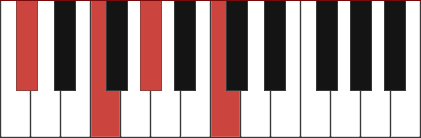
A♭7
A♭ - C - E♭ - G♭
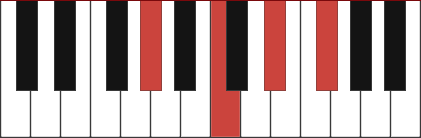
B♭m7
B♭ - D♭ - F - A♭
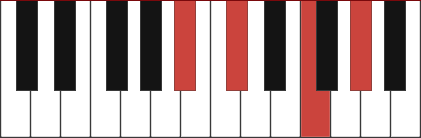
G♭maj7
G♭ - B♭ - D♭ - F
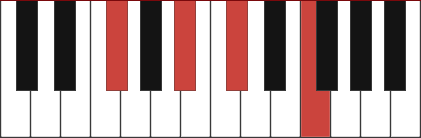
E♭m7
E♭ - G♭ - B♭ - D♭
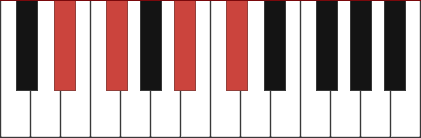
B
B - D# - F#
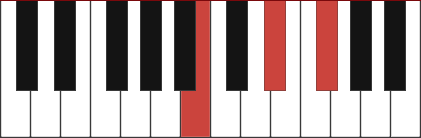
D♭ Major’s Parallel Minor
Changing between parallel keys can feel bold, emotional, and cinematic.
These notes come from the D♭ natural minor scale (F♭*, B♭♭*, and C♭*), and are commonly borrowed individually to colour chords in D♭ major.
* When a major key borrows from its parallel minor, the borrowed notes are written as lowered versions of the major scale’s notes. This allows chords to keep their correct letter names, instead of replacing them with different letters that represent the same pitch.
| ♭III | iv | v | ♭VI | ♭VII |
|---|---|---|---|---|
| F♭ | G♭m | A♭m | B♭♭ | C♭ |
| F♭ major | G♭ minor | A♭ minor | B♭♭ major | C♭ major |
| F♭- A♭- C♭ | G♭ - B♭♭ - D♭ | A♭ - C♭ - E♭ | B♭♭ - D♭ - F♭ | C♭ - E♭ - G♭ |
Swipe to see all chords →